Maintaining a safe and healthy environment is a top priority for every homeowner and business manager. While we often focus on visible cleanliness—mopping floors or wiping surfaces—the presence of cockroaches introduces a hidden health risk that is frequently underestimated. These pests aren’t just a nuisance; they are carriers of pathogens and allergens that can silently compromise the well-being of families, employees, and customers.
Think of it this way: when a cockroach enters your home, it’s not merely an unwanted visitor—it’s a tiny, walking laboratory of bacteria. Understanding how these pests affect our health is the first step toward reclaiming control of our living and working spaces.
The Hidden Health Risks in Our Homes and Offices
Cockroaches are masters of survival. They spend much of their lives in unsanitary environments—drains, sewers, and waste areas—and then migrate into kitchens and offices. In doing so, they act as mechanical vectors for serious illnesses.
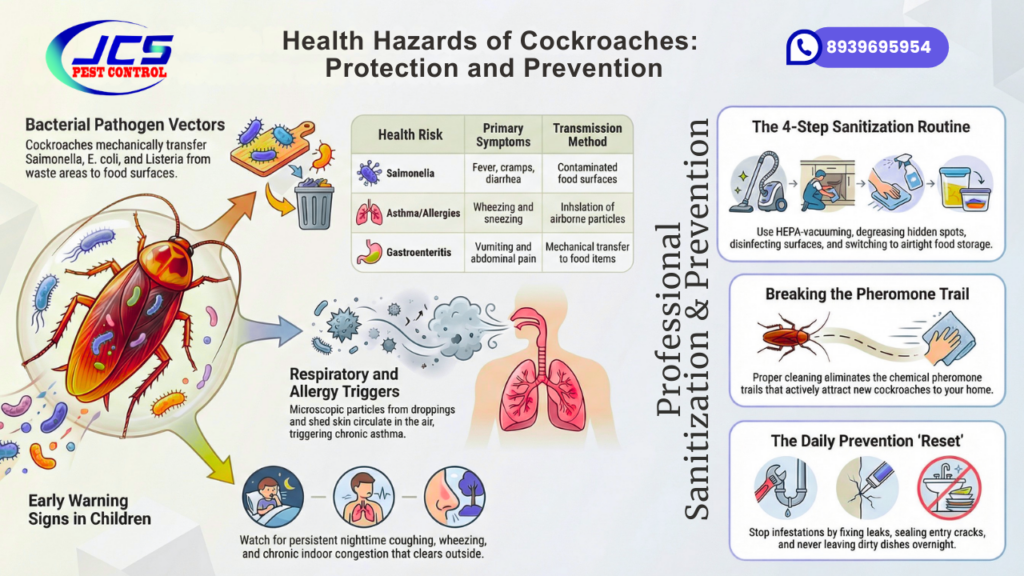
These pests carry bacteria like Salmonella, E. coli, and Listeria, notorious for causing food poisoning. Their droppings, saliva, and shed skin also break down into microscopic particles that circulate in the air, triggering respiratory issues and chronic allergies.
Tip: Regularly wipe down counters and keep hidden corners dry to reduce roach activity. Even simple daily habits can make a significant difference.
Protecting Children: Allergy and Asthma Risks
Children are especially vulnerable to cockroach allergens because they breathe faster and spend more time close to the floor. Symptoms of cockroach-related asthma or allergies often mimic a persistent cold, which makes them easy to overlook.
Symptoms to Watch For:
- Persistent Coughing: A dry, irritating cough, often worsening at night or after indoor play.
- Wheezing: Whistling sounds during breathing, signaling airway irritation.
- Chronic Congestion: Frequent sneezing or a stuffy nose indoors, which clears outside.
- Skin Sensitivity: Unexplained rashes or itchy patches without changes in diet or products.
Recognizing these signs early allows parents and managers to take prompt action, protecting children’s health and improving indoor air quality.
How to Sanitize a Kitchen After a Cockroach Infestation?
Eliminating the pests is only part of the solution. Knowing how to sanitize a kitchen after a cockroach infestation ensures that food preparation areas are safe, clean, and free from lingering pathogens.
Step-by-Step Sanitization Routine:
- High-Efficiency Vacuuming: Use a HEPA-filter vacuum to remove droppings, eggs, and allergenic dust.
- Degrease Hidden Spots: Scrub under sinks, behind appliances, and along baseboards to remove chemical trails left by cockroaches.
- Disinfect Surfaces: Wipe down counters, knobs, pantry shelves, and utensils with food-safe disinfectants.
- Airtight Food Storage: Replace cardboard boxes with sealed plastic or glass containers to prevent re-infestation.
Pro Tip: Regular sanitization not only removes bacteria but also eliminates pheromone trails that attract new roaches.
Best Ways to Prevent Cockroaches from Spreading Germs
Prevention is far easier than fighting a full-blown infestation. Implementing consistent habits can dramatically reduce the risk of germs being transmitted.
Key Prevention Strategies:
- Eliminate Moisture: Cockroaches need water to survive. Fix leaks and wipe sinks dry.
- Seal Entry Points: Use caulk to fill cracks around plumbing, vents, and baseboards.
- Nightly Kitchen Reset: Never leave dirty dishes or food scraps overnight.
- Proper Waste Management: Use covered trash bins and empty them daily to avoid attracting pests.
Tip: Even small, consistent actions like wiping crumbs and sealing containers count as major defenses against infestations.
Common Health Risks at a Glance
|
Health Issue |
Primary Symptoms |
Transmission Method |
|
Salmonella |
Fever, cramps, diarrhea |
Contaminated food surfaces |
|
E. coli Infection |
Nausea, severe stomach pain |
Contact with fecal matter |
|
Asthma/Allergies |
Wheezing, sneezing, skin rashes |
Inhalation of airborne droppings and skin |
|
Gastroenteritis |
Vomiting, abdominal pain |
Mechanical transfer to food items |
Specialized Support for Urban Environments
In a dense city like Chennai, pests easily move between buildings through walls, plumbing, and electrical conduits. DIY approaches often fail against such complex infestations.
Chennai Pest Control offer expertise to manage these challenges. Integrating services such as Termite Control Chennai ensures that the building is protected from multiple pests simultaneously. For immediate issues, targeted Cockroach Pest Control Chennai treatments break the reproductive cycle, providing long-term solutions rather than temporary relief.
FAQs
- Can touching cockroach droppings make you sick?
Yes. Droppings carry bacteria that can cause skin irritation and gastrointestinal issues. Always wear gloves and a mask when cleaning affected areas. - Why do I see roaches even in a clean home?
Cockroaches seek water and shelter. They can enter via grocery bags, boxes, or tiny structural gaps, making sealing entry points as important as cleanliness. - How long do cockroach allergens remain in a room?
Without thorough cleaning and HEPA vacuuming, allergens can persist for months. A proper sanitization routine is essential.
Conclusion
Cockroach infestations are more than a nuisance—they pose a serious health risk. By staying vigilant for signs like allergies or asthma in children, implementing daily cleaning habits, and knowing how to sanitize a kitchen after a cockroach infestation, you protect both health and hygiene. Adopting the best ways to prevent cockroaches from spreading germs ensures a safer, healthier environment for everyone in your home or office.
When infestations persist, professional support from JCS Pest Control can restore safety, comfort, and peace of mind, providing long-term solutions tailored to Chennai’s urban environment.