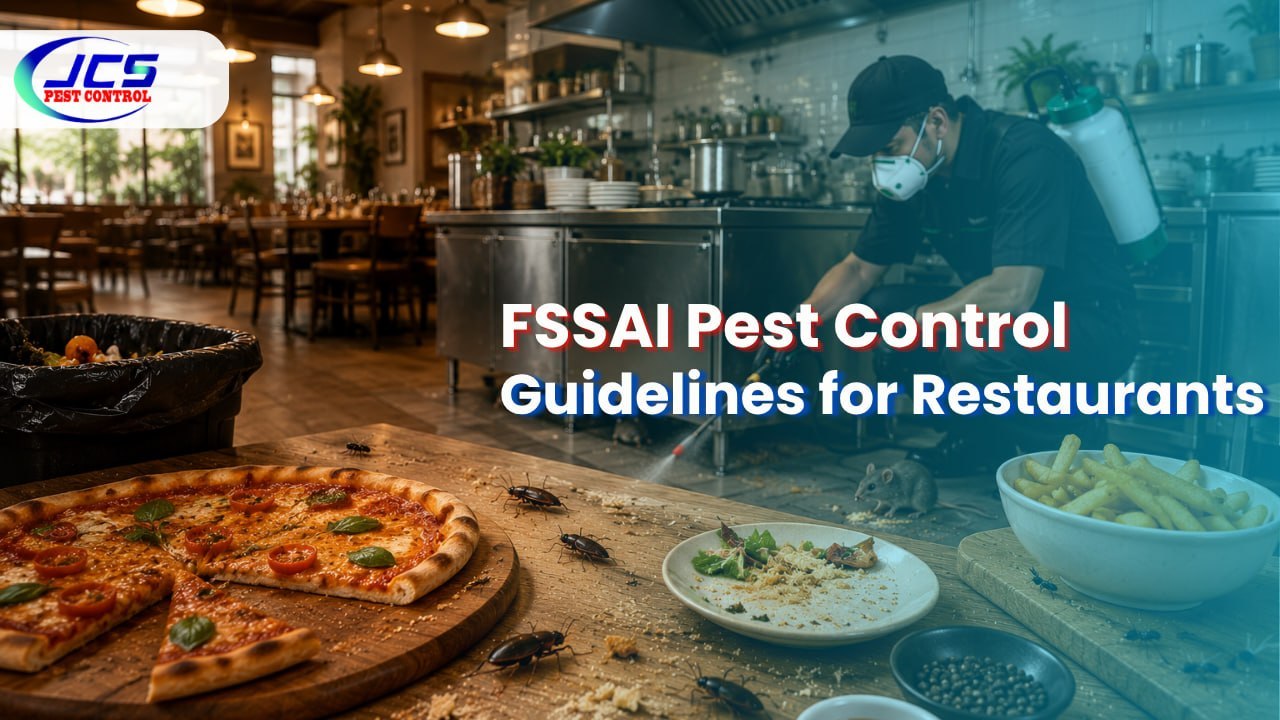
Running a restaurant today is not only about serving tasty food. Customers also expect clean kitchens, safe food handling, and proper hygiene. Even a small pest issue can lead to complaints, bad reviews, or inspection problems.
At JCS Pest, we work with restaurants, cafés, and food businesses across Chennai, and many owners still ask the same question:
“What exactly does FSSAI expect for pest control?”
This guide explains the important rules, current pest control trends, and practical tips restaurants can follow to stay compliant and inspection-ready.
Many food business owners are now searching for information about FSSAI pest control guidelines for restaurants to improve hygiene and maintain food safety standards.
Why Pest Control Matters in Restaurants
Pest control is a deal for restaurants. If you do not take steps to prevent pests they will come. Food bits, moisture and warm places are like an invitation to cockroaches, rodents, flies and ants.
The problem is not about how things look. Pests can carry bacteria, make food dirty, damage packaging and create health risks. If a customer sees a rat or a cockroach they will lose trust in your restaurant.
This is why FSSAI is very serious about restaurants being clean and pest-free.
At JCS Pest we tell restaurant owners that good pest control is not about fixing the problem after it happens. It is about making sure the problem never starts.
Restaurants looking to improve hygiene standards often choose professional services like Chennai Pest Control to maintain safe kitchen environments.
What Does FSSAI Expect From Restaurants?
So what does FSSAI expect from restaurants? They do not just want you to hire someone to spray sometimes. They want you to have a system to keep your place clean and pest-free.
The FSSAI rules focus on:
- Keeping pests out of the food areas
- Keeping storage and waste areas clean
- Checking for pests regularly
- Using approved methods to control pests
- Keeping records of what you do
- Not making things dirty when you treat for pests
Sometimes restaurants fail the inspections not because they have a lot of pests but because they do not have the right records or systems in place.
These practices are now considered part of the growing Restaurant pest management standards India that food businesses are expected to follow.
Common Pest Problems in Restaurants
At JCS Pest, we see a lot of pest problems in restaurants. These include:
- Cockroaches in drains and kitchen corners
- Rats and rodents in garbage areas and ceilings
- Flies in waste disposal areas
- Ants in counters and ingredient shelves
- Termites in wooden things
Rodent problems are becoming more common in busy kitchens. Many restaurants now use Rat Control Services In Chennai to avoid contamination and stay ready for inspections.
Some restaurant owners also use Cockroach Pest Control Chennai services to manage recurring infestations in kitchen drainage and cooking areas.
Wooden interiors and storage spaces may also require Best Termite Control In Chennai services to prevent structural pest damage.
Modern Pest Management for Restaurants
The way restaurants handle pests is changing. Now it is not about spraying sometimes. It is about long-term prevention, monitoring and following the rules.
Professional pest management includes:
- Checking for pests
- Keeping pests from getting in
- Controlling waste
- Treating for pests on a schedule
- Monitoring pest activity
At JCS Pest, we make a plan for each restaurant based on their kitchen, waste, storage and daily operations.
Importance of Pest Control Logbooks
One thing that is often overlooked is keeping a pest control logbook. Inspectors always check these records. A good logbook should include:
- When the treatment was done
- What kind of pest was found
- How the pest was treated
- What chemicals were used
- Who did the treatment
- When the next treatment is scheduled
- What was found during the treatment
Restaurants that keep records usually have easier inspections and better results.
Many restaurant owners also want to understand how to maintain a pest control logbook for FSSAI so they can stay prepared for inspections and maintain proper documentation.
What Inspectors Usually Check
Inspectors check a lot of things during an audit, including:
- Kitchen drainage systems
- Dry ingredient storage
- Refrigeration sections
- Waste disposal areas
- Pest monitoring devices
- Service certificates
- Chemical storage practices
- Pest control logbooks
Even if a restaurant looks clean they can still fail the inspection if its records are not good or if they do not have the preventive measures in place.
This is one of the main reasons why businesses pay close attention to FSSAI food safety audit pest control requirements during inspections.
Traditional Pest Control vs Modern Preventive Pest Management
|
|
|
|
|
|
|
|
|
|
|
|
|
|
|
|
|
|
|
|
|
At JCS Pest, we now see more restaurants shifting toward preventive pest management because it supports both hygiene and FSSAI compliance.
Latest Pest Control Trends in Restaurants
There are some trends in pest control that restaurants are following. These include:
- Using reporting systems
- Choosing treatments that're safe and do not smell bad
- Signing contracts for pest management
- Focusing on hygiene and compliance
At JCS Pest we have seen a lot of restaurants wanting to be proactive about pest control so they can stay inspection-ready.
Warning Signs Restaurants Should Not Ignore
There are some warning signs that restaurants should not ignore. These include:
- Cockroaches during the day
- Rat droppings near storage
- Damaged food packaging
- Bad smells
- Fly activity near garbage
- Wooden damage from termites
If you see these signs you may need help to get rid of the pests and improve your sanitation practices.
Simple Hygiene Tips for Restaurant Owners
Our team at JCS Pest has learned that simple habits can make a difference in restaurant hygiene. Here are some tips we share with restaurant owners:
- Keep drainage areas dry
- Store ingredients properly
- Do not leave waste
- Train staff to report pest sightings
- Schedule preventive services
Many restaurants now follow these tips. Use professional pest control services to stay clean and safe.
FAQs
1. Do restaurants have to do pest control under FSSAI?
Yes FSSAI expects all food businesses to maintain pest- hygienic environments.
2. How often should restaurants do pest control?
Most restaurants should do pest control monthly or quarterly depending on their operations and risk levels.
3. What records should restaurants keep for inspections?
Restaurants should keep pest control reports, treatment details, technician records and monitoring logbooks.
4. Can pest issues affect FSSAI audit results?
Yes, poor pest management or incomplete documentation can negatively affect food safety audits.
5. Why is preventive pest control important for restaurants?
Preventive pest management reduces infestation risks, protects food safety and helps businesses avoid operational problems later.
Conclusion
In the end restaurant hygiene is not about the restaurant. It is about the customer experience. That is why proper pest management is essential for every restaurant.
At JCS Pest our goal is to help restaurants maintain kitchens, reduce pest risks, stay inspection-ready and protect their reputation.